February Market Update
- Crude Prices and Geopolitical Risk
- Pennsylvania Gasoline Tax Remains Steady
- Automakers Back Trump’s Plan to Rollback Fuel Economy Regulations
- U.S. Heating Oil Futures Ease from 10-Week High
- American Oil Companies Likely to Produce in Venezuela in Coming Weeks
- Gas Price Seasonality Explained
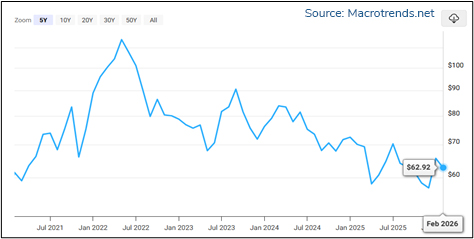
Crude Price Decline Amid Easing Geopolitical Risk
- Due to stronger U.S. dollar and easing tension in the Middle East.
- And increasing crude production in Venezuela – boosting supply and pressuring prices.
Crude markets opened with a brief geopolitical risk‑driven price rally as tensions involving Iran and Venezuela lifted benchmarks by roughly $6/bbl before easing mid‑month, while WTI climbed steadily from the high‑$50s into the mid‑$60s by month‑end as U.S. crude inventories remained about 3% below the five‑year average and refinery utilization hovered near 91%.
Supply conditions were shaped by OPEC+ reaffirming a pause in production increases for February and March 2026, supporting near‑term stability, while U.S. production growth slowed alongside flat oil‑directed rig activity—oil rigs holding near 411 and the Permian slipping to 242—which reinforced a disciplined shale response despite late‑month price strength. In the forward market, WTI maintained a backwardated structure (e.g., Mar’26 ~$63.5 vs. Dec’26 ~$61.2), reflecting tighter prompt balances and discouraging storage builds even as broader 2026 forecasts pointed to rising global inventories.
Overall, U.S. fundamentals—including lower imports, strong refinery demand, and modest product builds—kept Gulf Coast balances relatively tight and helped anchor WTI’s premium to later‑dated barrels despite the year’s expected loosening in global supply‑demand conditions.
Gasoline Prices and Pennsylvania Tax Impact
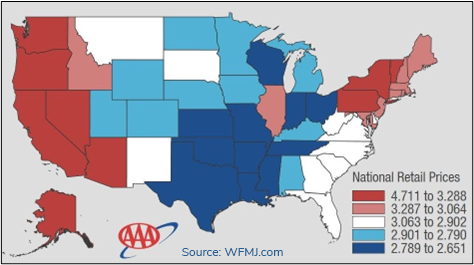
Pennsylvania’s gasoline tax will remain unchanged in 2026, holding steady at 57.6 cents per gallon, according to the Pennsylvania Department of Revenue’s published 2026 Oil Company Franchise Tax rates. Although Pennsylvania uses an automatic adjustment mechanism that can raise or lower the fuel tax annually, this mechanism did not trigger a change for January 1, 2026, leaving the gasoline tax flat for the new year. As a result, Pennsylvania continues to rank among the highest‑taxed states for gasoline, with a combined state and federal gasoline tax reaching approximately 77 cents per gallon, placing it just behind California and Illinois in total burden at the pump.
Trump’s Plan for Fuel Economy Rollback Gains Support
- Major carmakers, through the Alliance of Automotive Innovation, support the Trump Administration’s plan to significantly relax fuel-economy standards.
- President Trump’s proposal would lower the 2031 fleet target to about 34.5 mpg from 50 mpg, reducing average vehicle prices but increasing long-term fuel dependence.
Major automakers have voiced support for the Trump administration’s proposal to roll back federal fuel economy standards finalized under President Biden, arguing previous rules are no longer achievable given slower-than-expected U.S. electric vehicle adoption and reduced policy support. In a filing led by the Alliance of Automotive Innovation, companies including General
Motors, Ford, Toyota, and Volkswagen backed the administration’s plan to lower required efficiency gains but urged regulators to revise parts of the proposal, such as preserving credit trading and continuing credits for fuel-saving technologies.
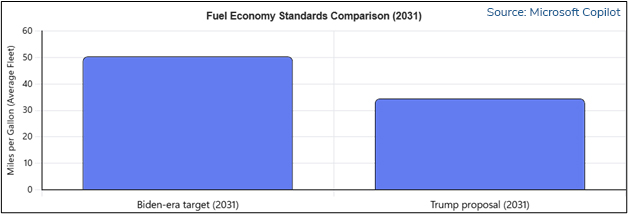
The National Highway Traffic Safety Administration’s plan would cut the 2031 average fleet target to about 34.5 miles per gallon, down from roughly 50 mpg under Biden’s standards. This moves the agency estimates will lower upfront vehicle costs for consumers by approximately $930 while increasing gasoline consumption and carbon emissions over time.
Heating Oil Futures Fall 4-5% from 10-Week High
- Heating‑oil prices were volatile but generally weakened mid‑month.
- Arctic cold spell before January 30 drove a sharp rise in distillate demand, reflected in a 5.55 million‑barrel draw in distillate stocks in the prior week.
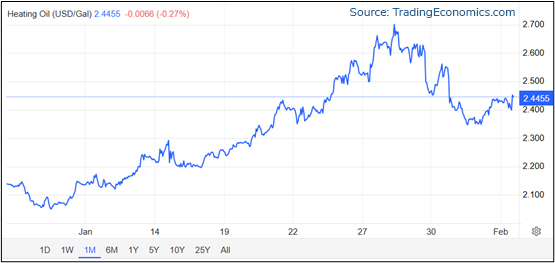
U.S. heating‑oil markets saw mid‑month price softness, with NY Harbor ULSD futures falling about 3% around January 15 as traders balanced firm distillate inventories with easing crude benchmarks. An Arctic cold spell earlier in the month drove a sharp distillate draw of 5.55 million barrels, confirming strong heating‑fuel demand, while East Coast distillate stocks fell to 32.2 million barrels, about 4% below the five‑year average, tightening regional balances during peak winter usage. Refineries ran near 95% utilization, though distillate production dipped slightly to 5.3 million bpd, and demand averaged 3.7 million bpd, up 2.2% year‑over‑year, keeping supply tight despite steady national inventory levels of 129.2 million barrels. Overall, January transitioned from early‑month strength driven by cold‑weather demand to mid‑month weakness as crude softened, before tightening again late‑month; the February outlook hinges on whether winter conditions intensify or moderate, which would respectively pressure or ease heating‑oil prices.
The decline was reinforced by supply data showing unexpected build in distillate inventories, including a second consecutive weekly increase in heating oil stockpiles, even as prices remain above early-January levels due to the lingering impact of colder weather in the Midwest and Northeast, refinery disruptions, and fuel switching driven by high natural gas prices.
Licenses for U.S. Oil Companies to Produce in Venezuela Looming
- General Treasury Licenses may be issued by the Trump administration in the coming weeks allowing American Oil companies to produce oil and gas in Venezuela.
- Industry response has been mixed. Chevron says their production can increase by half in the next two-years, while ExxonMobil and other majors remain cautious, citing Venezuela’s history of asset seizures and political risk.
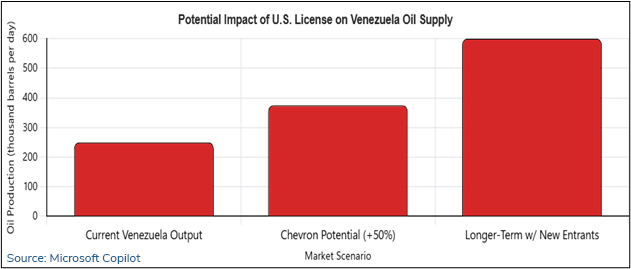
The Trump administration is considering issuing a general U.S. Treasury license that would allow oil companies besides Chevron to produce oil and gas in Venezuela, a major shift from current sanctions that limit upstream activity. The move follows the U.S. capture of former President Nicolas Maduro and recent Venezuelan reforms easing state control of the oil sector. Washington has pressed large industry players to invest heavily in rebuilding the nation’s deteriorated energy infrastructure.
Chevron, which currently produces about 250,000 barrels per day under a specially issued license, says output could increase roughly 50% within the next 18-24 months if approvals expand. However, other major producers such as ExxonMobil remain wary due to decades of political instability within the country. If implemented, the policy could eventually boost global oil supply, but likelihood of investment and other risks remain uncertain.
Changing Seasons, Changing Prices at the Pump
Gasoline prices in the United States follow a predictable seasonal cycle, with the lowest prices typically occurring in the winter months and rising through the spring as driving demand increases and refineries conduct scheduled maintenance. Since fuel demand is lowest early in the year, refineries often reduce output temporarily for turnarounds which can tighten supply just as motorists begin to drive more, placing upward pressure on retail prices each spring.
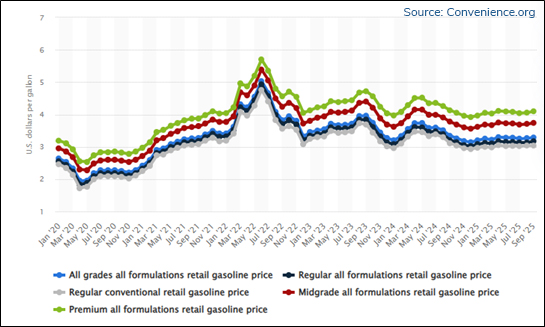
A major contributor to spring price increases is related to the transition from winter-blend to summer-blend product. Summer-blend fuels are more expensive to produce and distribute as they must meet stricter environmental standards and come in numerous region-specific formulations. The added production complexity, combined with compliance deadlines for terminals and retailers in later spring, further tightens supply and increases costs. This makes seasonality a recurring feature in the fuel market rather than a result of retailer pricing decisions.
Sources:
- NASDAQ
- Macrotrends.net
- Marketwatch.com
- WFMJ.com
- Reuters.com
- Tradingeconomics.com
- Statista.com
- Convenience.org